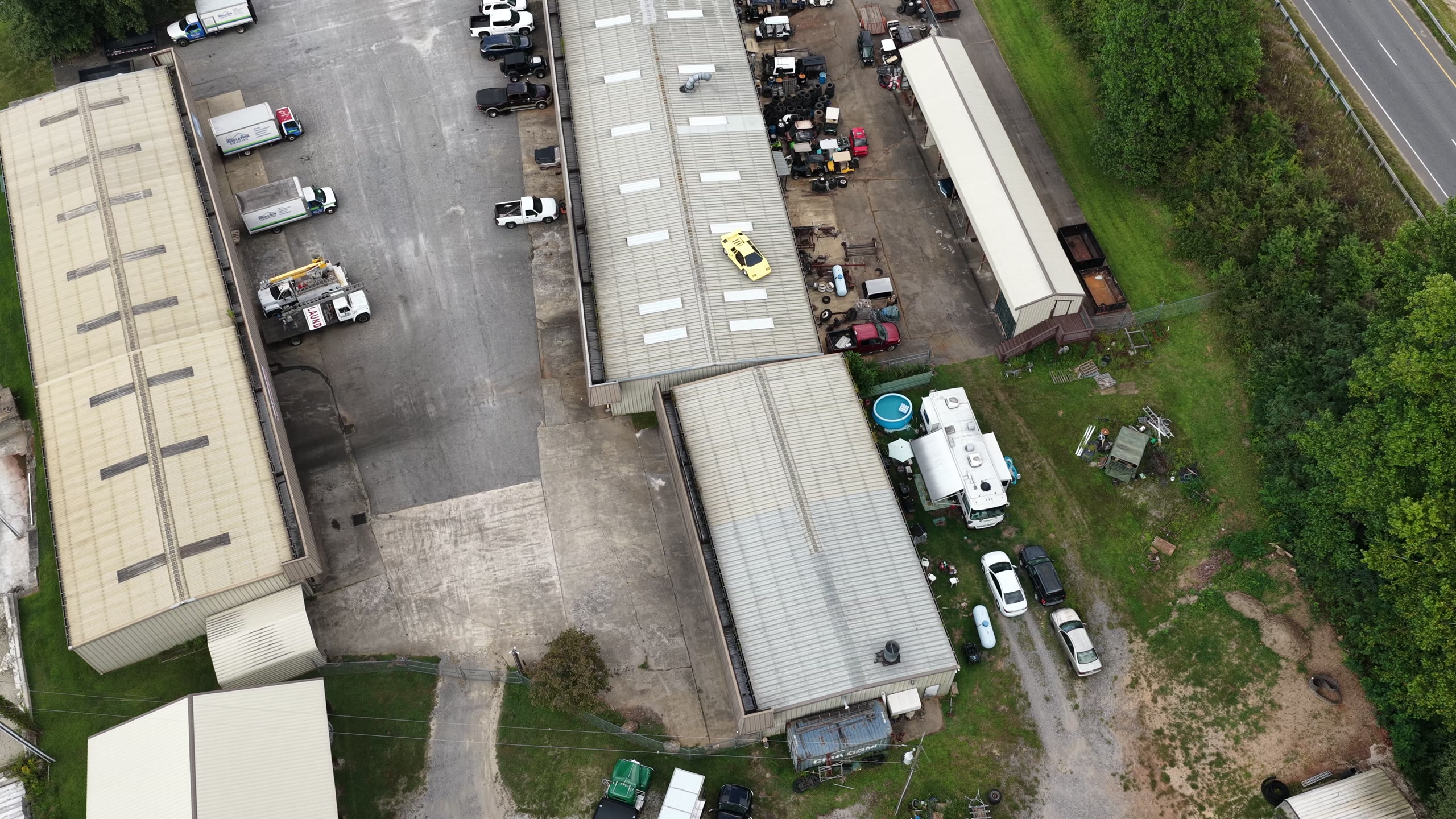
Most commercial roof problems don’t announce themselves. By the time a tenant calls about a stain on the ceiling tile, water has been moving through the assembly for months — spreading sideways along the deck, soaking insulation, finding the path of least resistance. The leak shows up in one place. The failure is somewhere else entirely.
That gap between where you see the problem and where the problem is, is the whole reason aerial inspection exists.
The problem with the old way
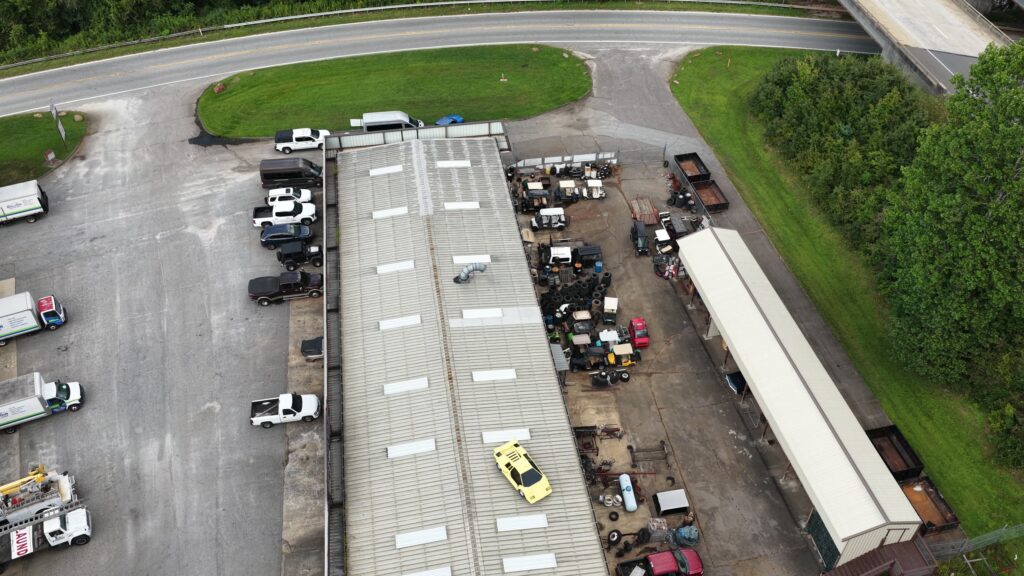
Sending someone up a ladder to walk a 60,000 square foot warehouse roof has three problems, and only one of them is safety.
It’s dangerous. Falls remain one of the leading causes of death in construction and maintenance work. Every roof walk is exposure — to the edge, to skylights, to a membrane that may not be carrying weight the way it did when it was installed.
It’s slow. A thorough walk-over of a large commercial roof takes hours. Multiply that across a portfolio and inspection becomes something you do after a problem, not before one.
And it’s inconsistent. Two inspectors walking the same roof produce two different reports. Neither is lying. They just noticed different things, from different angles, on different days. Six months later, when you want to know whether that seam got worse, you’re comparing one person’s memory against another’s.
What changes with aerial data
A drone inspection replaces the walk with a flight — but the real shift isn’t the aircraft. It’s what you’re left holding afterward.
Complete coverage, not a sample. A programmed flight captures the entire roof surface at consistent altitude and overlap. Not the parts that were easy to reach. Not the parts someone thought to look at. All of it.
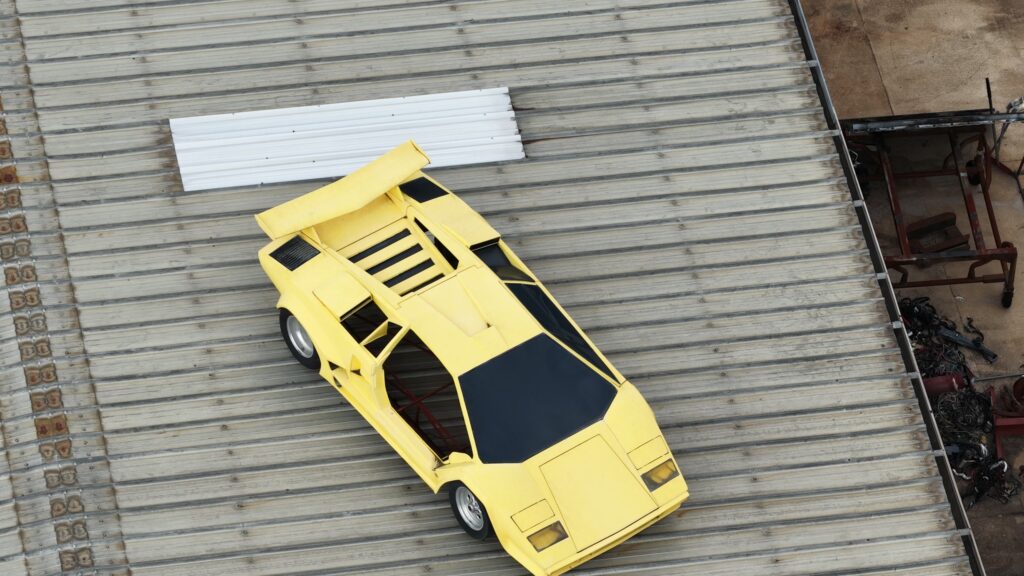
Resolution you can zoom into. Modern inspection cameras resolve detail fine enough to see a lifted seam edge, a punctured membrane, corrosion starting at a fastener head, or standing water ponding where it shouldn’t.
Thermal, where moisture hides. This is the part most property managers haven’t seen. Wet insulation holds heat differently than dry insulation. Flown at the right time — typically after sunset, when the roof is giving up the day’s heat — a thermal sensor shows saturated areas as clear temperature anomalies under a membrane that looks perfectly fine in daylight. You find the water before the ceiling tile does.
A record that repeats. Because the flight is programmed, next year’s inspection captures the same roof from the same positions. Now you can actually compare. That seam either moved or it didn’t, and you can see it rather than argue about it.
What you get at the end
A flight is not a deliverable. What lands on your desk should be:
- A full-resolution orthomosaic — the entire roof stitched into one measurable, scaled image you can zoom around in
- Flagged defect imagery, each item located on the roof plan rather than described in a sentence
- Thermal overlays where moisture intrusion is suspected
- A written summary you can hand to a roofer for a bid, or to ownership to justify a capital request
That last point matters more than it sounds. The most common thing we hear from facilities managers isn’t “I didn’t know there was a problem.” It’s “I knew, but I couldn’t prove it well enough to get it funded.” Photographs with locations attached change that conversation.
When it’s worth flying
After a storm. Hail and high wind do damage that isn’t visible from the ground and often isn’t visible from the roof surface either. Documented quickly, that becomes an insurance claim. Documented six months later, it becomes an argument about when it happened.
Before you buy. Roof condition is one of the largest single line items in a commercial building’s near-term capital plan. Knowing whether you’re inheriting two years of life or fifteen belongs in due diligence.
On a schedule. Annual or semi-annual flights build the history that makes everything else possible. The first inspection tells you the condition. The third one tells you the trend — and the trend is what lets you budget instead of react.
Before the warranty runs out. Manufacturer warranties have conditions, and documented maintenance is frequently one of them. An inspection record protects that coverage.
The part that isn’t about drones
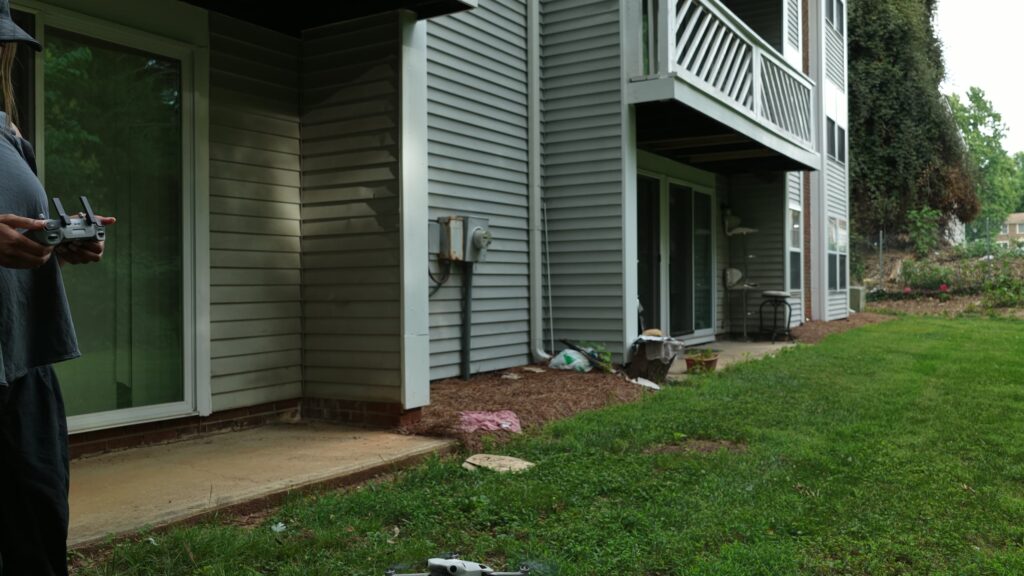
A drone is a camera on a mount. What determines whether an inspection is worth anything is everything around the aircraft: flying it legally, flying it consistently, and knowing what you’re looking at when the images come back.
Commercial flight requires an FAA Part 107 certificate. Airspace near airports requires authorization before the aircraft leaves the ground. Flights over people, at night, or beyond visual line of sight carry their own rules. An operator who treats those as paperwork is a liability attached to your building.
And reading a roof is its own skill. Knowing a modified bitumen assembly from a single-ply TPO, knowing what ponding means on a low-slope roof versus what it means on a metal one, knowing which thermal anomaly is trapped moisture and which one is just a warm HVAC curb — that’s not something the aircraft does for you.
That combination — the certificate, the equipment, and knowing what the images mean — is what separates an inspection from a folder of pictures.
25 Hour Drone & Videography provides FAA Part 107 certified aerial inspection for commercial roofs, towers and utility infrastructure across the Charlotte and Concord, North Carolina region — including thermal imaging and RTK-accurate mapping.
Considering an inspection on a property you manage? Call (704) 626-0266 or reach us at contact@25hourdroneandvideography.com.
Leave a Reply